Substrate and Printing Research - Whiz
- Apr 8, 2020
- 5 min read
Updated: Apr 22, 2020
Printing Research
One of the main things that I knew would effect my final packaging design is how it will print onto packaging as I want just simple line pattern on card board. I had to use only secondary research to find the best combination as sadly I am limited in physically sampling as I do not have the equipment available to me at the moment.
Substrate
From the start of the project I wanted the substrate of my package to be recycled cardboard due to the look and help to connect to the old and new audience where sustainability is key attribute to making the Whiz appeal and stand out in the market.
Turrini, D., 2017. Democratic Cardboard. Materials and design for a sustainable society.The Design Journal, [online] 20(sup1), pp.S1682-S1691.
"The ecological advantage of the material [Cardboard], today obtained by recycling waste or from the controlled use of natural resources, is increased by light techniques that are mostly reversible. Thus cardboard becomes a metaphor for sustainability"
This quote from the journal helps to clarify that cardboard is sustainable due to how easily it can be recycled again, with out having to use harsh methods to recycle which can be less beneficial towards the environment.
Mucho - Dell

These single colour print onto cardboard by Mucho is the approach I would like to go with my packaging design. Mucho state on their website:
"Dell has always been environmentally conscious, so it was important that the brand-focused designs communicated that."
Furthermore saying that their aim is to show that Dell is an environmentally friendly brand communicated by Mucho through the use of a 'raw' substrate i.e. a substrate that does not have any finishes or inks to cover up the base material.
Different Printing types
There are four main different printing types that are compatible with printing on cardboard. The four are:
Screen Print
Flexographic Print
Litho Laminated Print
Digital
Screen print
The method of screen print is explained in my previous post. The positives of using screen printing for packaging is:
Cost effective for low quantity print runs
Produces a high-quality image on to corrugated cardboard
Can print on to a multitude of surfaces including cardboard and plastic
Creates long lasting images that will not easily rub off with use
However the negatives are:
Long preparation times before printing can begin
Minimum order numbers are required due to the long set-up processes
Due to the manual nature of the process, it is not suitable for mid – high volumes
There can be restrictions on the size of the graphic that can be printed
Costs can increase if the design contains a large variety of colours
Flexographic Print
Flexography (flexo) is a form of printing which makes use of a flexible relief plate. It begins with the development of a flexographic plate. The technique makes use of plates that have with raised images. Only the raised images come in contact with the substrate during printing and deposit ink onto the material, thus generating the printed image.
Positives:
Can be used to print use on a wide range of absorbent and non-absorbent materials
Images can be printed in a wide range of colours enabling vibrant image production
Uses fast drying inks
Cost effective and economical for large volume runs
Ink evaporates quickly making it safe for use on flexible food packaging
Negatives
Images tend to be simpler, being unable to produce complicated intricate artwork
Newer techniques can generate results more quickly and with a more crisp finish
Cost of printing plates means it is not suitable for low volume runs
Flexography can produce poor shadows
Potential for issues such as bleeding and pin-holing to occur on the finished product
Litho Laminated Print
Is the best for high volume print runs while still giving a good quality finish. The process is based on the repulsion of oil and water. The image that is to be printed is coated with ink from rollers within the printing press. The areas that are not to be printed attract a coating of water and as such repel any ink and remain unprinted.
However, normal Lithographic printing relies on feeding through thin substrates through the press hence this makes it unsuitable for printed cardboard packaging. Whilst cardboard is a strong and versatile material, it can be difficult to print directly on to due to its’ thickness and also the ridged surface (created by the fluting).
As such, when used for packaging, the design is printed onto paper which is then laminated onto the face of the corrugated board.
Positives
Achieves a high quality and consistent image every time
Suitable for high quality photographic quality imagery
Cost effective for high volumes as the unit cost decreases with increased quantities
Able to cope with long runs without losing quality
Can easily produce specialist finishes such as pantone spots and metallic colours
Negatives
The nature of the technique means that set up is expensive
Due to complex set up lithographic printing can take longer than other techniques
There is no option to amend designs once the plate has been set up / printing started
Smaller colour gamut therefore colours can be less bright
Not cost effective for short runs
Digital
Rather than making use of traditional printing press techniques, digital printing requires large format laser or ink-jet printers which deposit pigment or toner on to a wide range of materials that require printing.
In addition digital printers do not need the material to be tightly held or stretched during the printing process meaning that cardboard can be printed on using this technique.
Positives
No plates or complicated setup leads to a fast turn-around of orders
Easy to generate proofs before printing run begins with amendments easily achieved
Enables bright, vibrant images on materials
Cheaper than traditional options for low volume printing jobs
Negatives
Can be hard to match pantone colours
Specialist finishes such as metallic are not as easily achievable or cost effective
Quality can be inconsistent, as some materials produce better results than others
Expensive on longer runs due to print times
There is less control over the colours that are produced by the printer
Review
Overall in this scenario I would choose the litho laminated print as it is cost effective for high volume print runs which would be needed for the Whiz. It also maintains the print quality and has accurate colours.
Blind Embossing
I have previously used this technique and explained how to do the technique in my previous post. I have two ideas one is to blind emboss the pattern onto the cardboard, but I will offset the embossed pattern with the printed pattern. To create the idea of movement however I will stop the embossing where ever the pattern stops (title, imagery, writing). Another idea is to emboss the text boxes and make them stand out from the background creating a hierarchy making sure the viewer rests their eye on the title and logo first.
Planned Living Architects by A Friend Of Mine
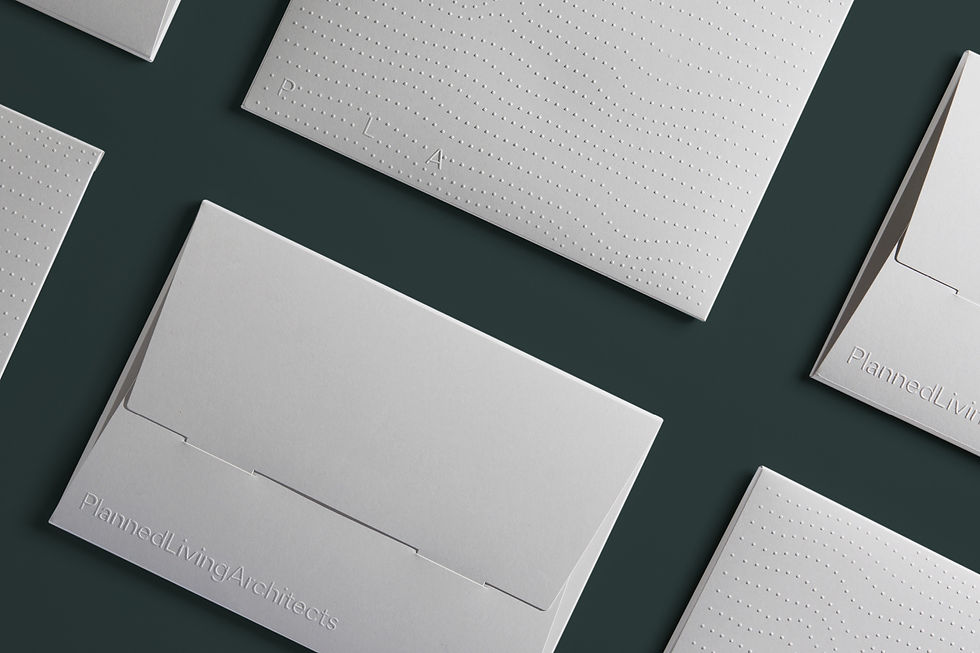
Researching this example of blind embossing helped me create an idea for embossing my own packaging. In their note cards they used a pattern blind embossed to create a use of subtle movement and texture making it very calming. They also used the negative to create the movement.
Tear Strip
I decided to use a tear strip in my packaging, to make it much more of an experience when opening the packaging, making it seem to be more fun and interesting. I was inspired by the tear strip I used when opening some packaging for GF Smith.


Here is a quick thumbnail that I did to show the tear strip and where it would be.


Comments