Zine - Workshop 1
- Nov 5, 2019
- 3 min read
Updated: Nov 11, 2019
In this workshop we were given the brief for our extended project in this module. The brief is through using the previously explored objects (My wooden Teddy bear) create a Zine along the narrative of a love, ghost or detective story. The only constraints are it has to have a minimum of ten images (photographic essence) and can be no smaller than A5 or bigger than A2.
Narrative
For the first section of the lecture I explored which narrative I would take. I had in the back of my mind what I have learnt of the past 6 weeks is that the phrase 'less is more' is true when it comes to communicating a clear narrative. SO i tried to make my story simple, I had been thinking about my narrative for a while and through some collage I did in the collage/bricollage workshop I decided to make my narrative about the teddy being lost. Which handily runs along the detective story.

I was deliberating on which view I wanted it from whether I wanted it from the teddy's perspective, trying to find its owner because it has grown up or whether I wanted it from the view of a child who has lost it's toy. I decided to go along with the story of the teddy losing its owner because when mind mapping potential ideas of words and imagery, I had more ideas on this story. I also thought it could be more simple to communicate.
What is a Zine?
Before we could tackle anything in this project we had to make sure that we understood what a Zine is:
Zine
noun
\ ˈzēn \
Definition of zine
A noncommercial often homemade or online publication usually devoted to specialised and often unconventional subject matter.
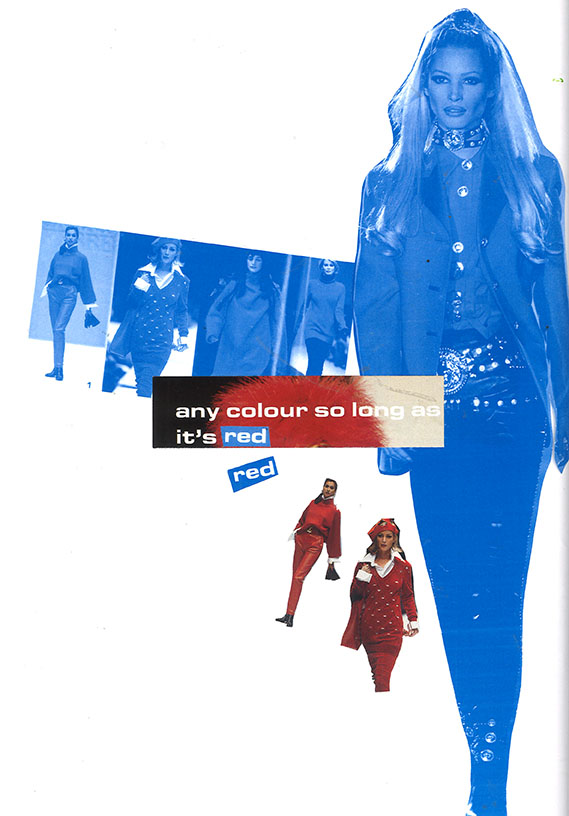
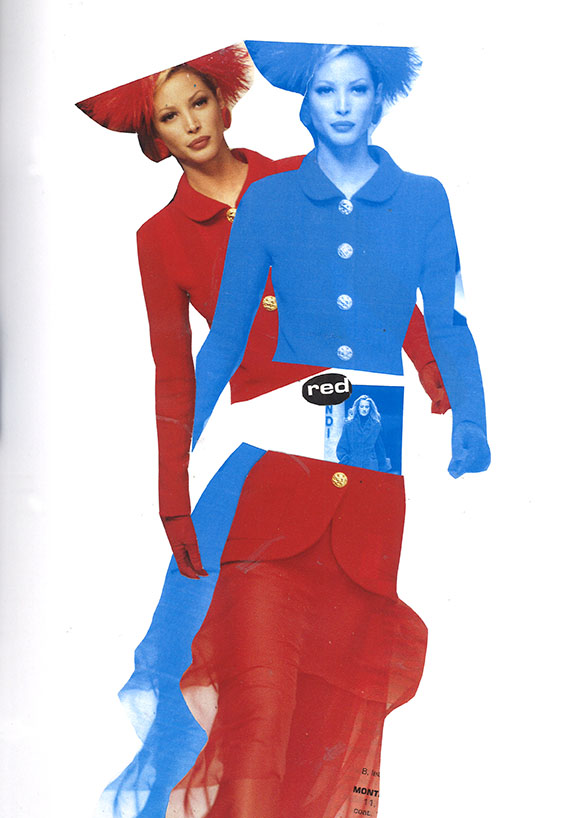
It is the opposite of a magazine where the magazine is formal a Zine is informal. To help us full understand we took a editorial page out of a glossy magazine and then created a Zine.

I took a double page spread out of Vogue's August 1992 magazine. Where the main headline was 'Any colour so long as it is red'. So for my zine reinterpretation I made nearly all the imagery blue. It was also clear that the page had a grid to it so I completely ignored it.


Research
Jake Tilson


I was inspired by Jake Tilson and his zine's called Breakfast Special. Where he made five books or zines about the five different breakfasts he had in each city.
His use of placement is simple it does not over crowd the page. He uses only short sentences to create a clear narration of his images.
David Carson - Ray Gun
David Carson created the famous Zine Ray Gun which used chaotic type and imagery to create a visual communication. Carson's work is almost the opposite to Jake Tilson work, there is a clear visual narrative in Tilson's however Carson's is chaotic and difficult to understand. However they are both successful Zines because they are playful. I want to make my zine's style more like Jake Tilson because I would like to get a clear and simple story across to the reader.

Fluxus
The Zine Fluxus was highly influential it created a movement revolving around its name. It was inspired by Dada design and they created the issues with a more DIY approach. Often very simple this zine would add minimal words or text to a page. This is most likely who Jake Tilson was inspired by when creating his own zine.


Comments